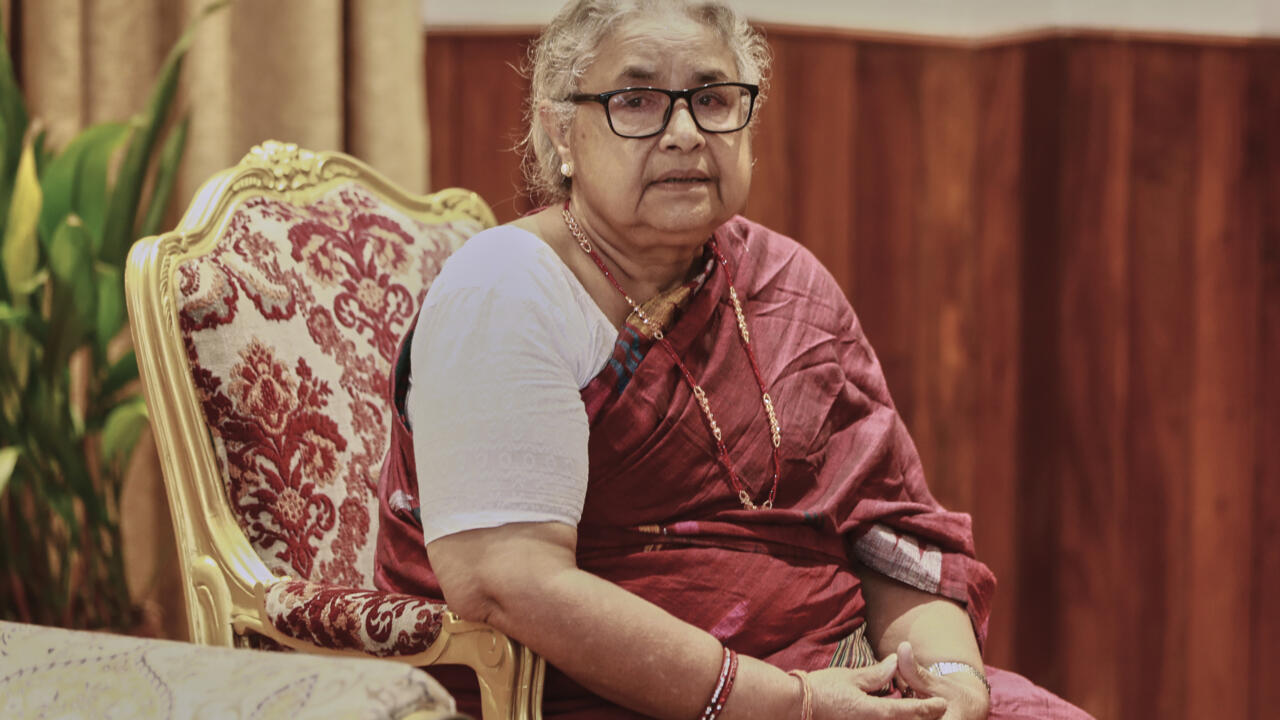
In an unprecedented moment in global political history, Nepal has become the first country to select a world leader through a digital vote on the social media platform Discord. On September 12, 2025, Sushila Karki, a 73-year-old former chief justice, was sworn in as Nepal’s interim prime minister, marking a historic milestone not only for digital democracy but also for gender equality, as she became the nation’s first female prime minister. This extraordinary event was driven by Nepal’s Gen Z activists, who, after toppling the government of Prime Minister KP Sharma Oli through widespread anti-corruption protests, turned to Discord to propose and endorse Karki as their interim leader. This article explores the context, process, and implications of this groundbreaking moment in Nepal’s political landscape.
The Spark: Gen Z Protests and the Fall of a Government
Nepal’s journey to this historic moment began with a wave of youth-led protests that erupted in response to a controversial government decision to ban 26 social media platforms, including Facebook, Instagram, WhatsApp, and X, for failing to comply with registration requirements. The ban, announced in early September 2025, was perceived as an attempt to stifle free expression and curb the growing influence of digital activism. This move, coupled with long-standing grievances over systemic corruption, nepotism, and economic inequality, ignited a firestorm among Nepal’s youth, particularly those from Generation Z (born roughly between 1996 and 2012).
The protests, initially organized online, quickly spilled onto the streets of Kathmandu and other parts of the country. What began as a demonstration against the social media ban evolved into a broader movement against the lavish lifestyles of “nepo kids” — the privileged children of Nepal’s political elite — and the entrenched corruption within the government. The protests turned violent, with clashes between demonstrators and security forces resulting in at least 51 deaths and over 1,300 injuries. On September 9, 2025, protesters set fire to government buildings, including the Singha Durbar, which houses Nepal’s parliament and key ministries, plunging the nation into chaos. The following day, Prime Minister KP Sharma Oli resigned, citing responsibility for the deaths and the escalating unrest.
With the government in disarray and a political vacuum looming, Nepal’s Gen Z activists, supported by the civic organization Hami Nepal, turned to an unlikely platform to chart the country’s path forward: Discord, a communication app originally designed for gamers.


Discord as a Digital Parliament
Discord, launched in 2015 by founders Jason Citron and Stanislav Vishnevskiy, was initially created to allow gamers to communicate without interrupting their gameplay. Over time, it evolved into a versatile platform for communities to discuss a wide range of topics, from gaming to education to activism. Its server-based structure, which allows large groups to organize discussions in dedicated channels, made it an ideal tool for Nepal’s Gen Z protesters to coordinate their movement and deliberate on their next steps. Unlike traditional social media platforms with endless content feeds, Discord offers a more structured environment for focused discussions, making it a natural choice for the youth-led movement.
Following Oli’s resignation, a Discord server named “Youth Against Corruption,” organized by Hami Nepal, swelled to over 145,000 members in just four days. This server became a virtual parliament where thousands of Nepalis, predominantly young activists, debated the future of their country. The platform hosted channels for announcements, fact-checking, ground updates, news, emergency helplines, and general discussions, allowing for a dynamic and inclusive dialogue. As one 23-year-old content creator, Sid Ghimiri, remarked to The New York Times, “The parliament of Nepal right now is Discord.”
The protesters’ goal was not to replace traditional democratic processes but to propose an interim leader who could stabilize the country and oversee elections scheduled for March 5, 2026. To achieve this, the Discord server hosted a series of polls to nominate potential candidates. Among those considered were Sagar Dhakal, a young politician; Kul Man Ghising, former chief of Nepal’s electricity authority; Rastra Bimochan Timilsina, a social media influencer; Harka Sampang, the mayor of Dharan; and Mahabir Pun, a social entrepreneur known for promoting technology in rural Nepal. After heated debates and multiple rounds of voting, Sushila Karki emerged as the clear favorite, securing over 50% of the 7,713 votes cast in the final poll.
The process, described by channel moderator Shaswot Lamichhane as a “mini-election,” was not without challenges. The server was repeatedly hijacked by trolls and non-Nepalese users, and some questioned the democratic legitimacy of a process involving only a fraction of Nepal’s 30 million population. Critics on platforms like Reddit raised concerns about potential voter fraud, given the ease of creating multiple Discord accounts. However, organizers emphasized that the vote was informal, intended only to propose a candidate to the military and President Ram Chandra Paudel, who would make the final appointment.
Sushila Karki: A Symbol of Integrity
Sushila Karki, born in 1952 in the Morang district of eastern Nepal, is a figure whose reputation for integrity and independence made her a compelling choice for interim prime minister. A trailblazer in Nepal’s legal system, Karki became the country’s first female chief justice in 2016, serving until 2017. During her tenure, she earned widespread respect for her anti-corruption rulings and her commitment to judicial independence, even in the face of political pressure. In 2017, she faced an impeachment motion from the ruling coalition after her bench overturned a government appointment for police chief, a decision seen as a defense of meritocracy against political cronyism. The motion was withdrawn after public and judicial backlash, cementing her image as a guardian of institutional integrity.
Karki’s rural roots and modest lifestyle resonated with Nepal’s youth, who saw her as a leader untainted by the corruption they were protesting against. Her legal expertise and deep knowledge of Nepal’s constitution made her an ideal candidate to navigate the country through its transitional period. As 28-year-old protester Biraj Aryal told CNN, “We want someone who has integrity and is not a political opportunist. She fits that category for us.” Similarly, 24-year-old law student Anjali Sah praised Karki’s reputation, noting, “She has shown she has a spine.”
Karki’s appointment was formalized on September 12, 2025, when she was sworn in by President Ram Chandra Paudel at the presidential palace in Kathmandu. The ceremony, broadcast live, followed negotiations between Paudel, Nepal’s army chief Gen. Ashok Raj Sigdel, and representatives of the Gen Z protest movement. Karki’s first act as interim prime minister was to dissolve Nepal’s parliament and schedule new elections for March 2026, signaling her commitment to restoring democratic processes.
The Role of Technology in Nepal’s Revolution
The use of Discord to select Nepal’s interim prime minister reflects the growing influence of technology in political movements worldwide. Nepal, where over half of the population is connected to the internet, has seen a surge in digital activism, particularly among its youth. The government’s attempt to ban social media platforms backfired, as protesters used virtual private networks (VPNs) and alternative apps like Bitchat, created by tech billionaire Jack Dorsey, to evade restrictions. Discord, with its large-scale server capabilities and real-time communication features, became the backbone of the movement, enabling protesters to organize, share information, and deliberate on leadership in a way that traditional political structures could not.
The Discord vote also drew parallels to decentralized governance models popular in the cryptocurrency community, with some X users noting the overlap between Nepal’s “internet-native revolution” and the ethos of decentralized autonomous organizations (DAOs). As one crypto enthusiast wrote on X, “Btw why Discord lmao … the server where they voted.” The platform’s role in Nepal’s political upheaval has sparked discussions about its potential as a tool for grassroots democracy, though experts like Steven Feldstein of the Carnegie Endowment for International Peace caution that its use at this scale is “pretty unprecedented” and may not be easily replicable.
Challenges Ahead
While Karki’s appointment has been hailed as a victory for Nepal’s youth and a testament to the power of digital activism, significant challenges remain. The country is still reeling from the destruction caused by the protests, with key institutions like the Supreme Court and banks in Kathmandu damaged and only beginning to reopen. The military, which assumed control of the streets after Oli’s resignation, continues to maintain a heavy presence, raising concerns about the fragility of Nepal’s democratic institutions.
Karki’s interim government faces the daunting task of restoring law and order, investigating the violence, and rebuilding public trust in governance. Her cabinet, expected to be appointed in the coming days, will need to address the demands of the Gen Z protesters while balancing the interests of political parties and other groups, including royalist factions that some fear may exploit the political vacuum. Constitutional expert Bipin Adhikari emphasized that one of Karki’s first challenges will be to bring those responsible for the protest-related violence to justice.
Moreover, some critics, including former Supreme Court justice Balaram K.C., have questioned whether Karki’s judicial background equips her for the political demands of the prime minister’s role. “Being a justice and being a prime minister are two different things,” he told The New York Times. Others have expressed concerns about the informal nature of the Discord vote, with one Gen Z member questioning Karki’s political affiliations and calling for a public oath of neutrality.
A New Era for Nepal?
Sushila Karki’s appointment as Nepal’s interim prime minister marks a turning point for the country, blending traditional leadership with a new form of digital democracy driven by its youth. The use of Discord to propose and endorse a national leader underscores the transformative potential of technology in reshaping political processes, particularly in moments of crisis. For Nepal’s Gen Z, this moment represents not just a victory over corruption but a bold assertion of their role in shaping the nation’s future.
As Nepal prepares for elections in March 2026, Karki’s leadership will be tested by the need to bridge generational divides, restore stability, and uphold the democratic values enshrined in the country’s constitution. Her appointment, born out of a digital revolution, offers hope for a more inclusive and accountable political system, but it also serves as a reminder of the fragility of democracy in times of upheaval. As 26-year-old protester Yujan told ABC News, “The stakes are too high for the movement to fail.”
Nepal’s experiment with digital democracy may inspire other nations grappling with political discontent and the rise of youth activism. For now, Sushila Karki stands as a symbol of integrity and resilience, leading Nepal into an uncertain but hopeful future.